







패스트 리딩(Fast Reading)

지식과 영감을 주는 서적을 빠르고 현명하게 선택할 수 있는 기회를 제공하여 드립니다. '패스트 리딩'과 함께 당신의 삶에 필요한 지식과 영감을 빠르게 충전하세요.

헤드 이미지

신뢰의 기술

신뢰의 기술 표지 이미지

임상 심리학자이자 리더십 전문가인 ‘헨리 클라우드(Henry Cloud)’의 저서 ‘신뢰의 기술(Trust: Knowing When to Give It, When to Withhold It, How to Earn It, and How to Fix It When It Gets Broken)’은 개인의 인간관계부터 조직의 비즈니스에 이르기까지 삶의 성패를 가르는 ‘신뢰’의 메커니즘을 심리학과 뇌과학, 수십 년간의 컨설팅 경험을 바탕으로 체계화한 책입니다. 이 책은 맹목적인 믿음이나 상처로 인한 과도한 불신을 넘어, 언제 신뢰를 주고, 언제 거두며, 어떻게 얻고 복구할 것인가에 대한 구체적인 가이드라인을 제시합니다.

The book “Trust: Knowing When to Give It, When to Withhold It, How to Earn It, and How to Fix It When It Gets Broken” by clinical psychologist and leadership expert Henry Cloud systematically organizes the mechanisms of “trust” that determine success or failure in life, from personal relationships to organizational business, based on psychology, neuroscience, and decades of consulting experience. This book goes beyond blind faith or excessive distrust caused by hurt, offering concrete guidelines on when to trust, when to withdraw, and how to gain and restore trust.



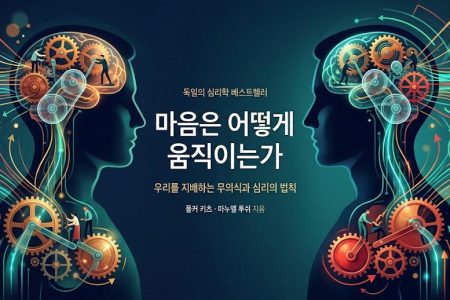
마음은 어떻게 움직이는가

마음은 어떻게 움직이는 표지 이미지

‘폴커 키츠(Volker Kitz)’와 ‘마누엘 투쉬(Manuel Tusch)’의 ‘마음은 어떻게 움직이는가(Warum uns das Denken nicht in den Kopf will)’의 는 인간이 스스로를 이성적이고 합리적인 존재라 믿지만, 실제로는 수많은 무의식적 편향과 심리 기제에 의해 좌우된다는 점을 40가지 핵심 심리학 법칙과 실험으로 밝혀낸 대중 심리학서입니다. 저자들은 일상, 직장, 대인관계에서 겪는 비합리적인 판단과 갈등의 배후를 추적하며, 마음의 작동 방식을 이해해 타인에게 휘둘리지 않고 관계의 주도권을 쥐는 실용적인 해법을 제시합니다.

Volker Kitz and Manuel Tusch’s How the Mind Moves (Warum uns das Denken nicht in den Kopf will) is a popular psychology book that reveals, through 40 key psychological laws and experiments, that although humans believe themselves to be rational and rational beings, in reality they are influenced by countless unconscious biases and psychological mechanisms. By tracing the root causes of irrational judgments and conflicts in daily life, work, and interpersonal relationships, the authors offer practical solutions to understand how the mind works and help you take control of your relationships without being swayed by others.


어떻게 나를 만들 것인가

어떻게 나를 만들 것인가 표지 이미지

‘수지 웰치(Suzy Welch)’의 ‘어떻게 나를 만들 것인가(Becoming You)’는 하버드 비즈니스 리뷰 편집장 출신이자 뉴욕대 스턴 경영대학원 교수인 저자가 진행해 온 인기 명강의 ‘비커밍 유’를 집대성한 책입니다. 남들이 정해준 성공의 기준에 맞춰 숨 가쁘게 달려오다 번아웃과 방향 상실을 겪는 현대인들에게, 타인의 기대가 아닌 ‘나다운 삶’을 주도적으로 재설계하는 구체적인 프레임워크를 제공합니다.

Suzy Welch’s Becoming You is a compilation of the popular lecture series Becoming You, led by the author, a former editor of the Harvard Business Review and a professor at NYU Stern School of Business. For modern people who have been running breathlessly to meet others’ standards of success only to face burnout and loss of direction, this book provides a concrete framework for proactively redesigning a life that is true to oneself, rather than one shaped by others’ expectations.


자가 수리점

자가 수리점 표지 이미지

‘헨리 비일러(Henry G. Bieler)’ 박사의 ‘자가 수리점(Food Is Your Best Medicine)’은 반세기 넘게 약물 처방 없이 음식과 자연치유만으로 환자들을 돌본 저자의 임상 철학과 질병관을 담은 고전적 건강서입니다. 저자는 인체를 수억 년 진화 과정에서 정교하게 완성된 하나의 ‘완벽한 자가 수리 공장’으로 바라보며, 현대 의학의 무분별한 약물 투여와 증상 억제 치료가 오히려 인체의 회복 능력을 가로막고 있다고 지적합니다.

Dr. Henry G. Bieler’s Food Is Your Best Medicine is a classic health book that presents the author’s clinical philosophy and view of disease, based on more than half a century of caring for patients through food and natural healing alone, without medication. The author views the human body as a single, meticulously perfected ‘perfect self-repair factory’ developed over hundreds of millions of years and points out that the indiscriminate administration of drugs and symptom-suppressing treatments in modern medicine are actually hindering the body’s ability to recover.


자기 신뢰

자기 신뢰 표지 이미지

‘랄프 왈도 에머슨(Ralph Waldo Emerson)’의 대표적인 에세이 ‘자기 신뢰(Self-Reliance)'(1841년 출간)는 스토리 중심의 소설이 아니라, 인간의 주체성과 내면의 신성함을 역설하는 사상적 철학 산문입니다. 에머슨은 19세기 미국 초월주의(Transcendentalism)의 거두로서, 개인이 타인의 시선과 사회적 통념에서 벗어나 자신의 직관과 신념을 믿고 살아갈 때 비로소 참된 인간이 될 수 있다고 주장합니다. 책의 핵심 논지와 전개 흐름은 크게 다음과 같이 정리할 수 있습니다.

Ralph Waldo Emerson’s representative essay, Self-Reliance (published in 1841), is not a story-driven novel but an intellectual philosophical prose work that emphasizes human agency and the divinity of the inner self. As a leading figure of 19th-century American Transcendentalism, Emerson argues that a person can only become a true human being when they break free from others’ gaze and social conventions and live by their own intuition and beliefs.